

Christmas 2012 overall was mainly a poor showing, with shoppers flocking to buy on-line rather than visiting a store. Even Tesco, trumpeting that sales had increase year-on-year, did not point out that last Christmas turnover had been way down – a small increase this year was better than 2011, but that was all. In all, in 2011 Tesco suffered a fall in overall profits of 2.3%; this Christmas their like-for-like sales were 1.8 % up on 2011, but still not back to previous years.
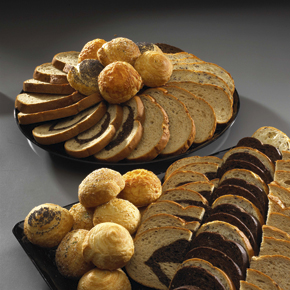
However, stores can take heart from the fact that most customers still prefer to buy their bread from a store; they like to look and ‘sniff’ bread and cakes. Almost everyone, even the most dedicated dieters, will eat bread every day, and the Western Europe bread industry produces 25 million tons of bread a year to satisfy demand.
According to the Bakers Federation:
• A third of production (eight million tons) is produced by the major producers, based mainly in Germany and the UK (60% of plant production).
• France, the Netherlands and Spain produce another 20% between them, • The rest is spread across other European countries.
• In Britain and Ireland 80% of the production comes from industrial bakeries
• In Europe it is craft bakeries that still have the major proportion of the market, although situation is changing.
• How much either sector will be producing next year however is starting to worry the major producers, after the disastrous floods and poor grain growing conditions this year. Gordon Poulson, Director of Britain’s Federation of Bakers, recently said that “wheat prices had rocketed over the past few months, and it is inevitable that bakers will have to recover these costs from retailers”.
In August, NABIM (National Association of British and Irish Millers) said prices for break-making wheat rose to over £200 (€285) per ton across Europe”, and forecast “there will be a continuing upward price shift for the f foreseeable future. Poor harvests with lower yields and a failure to meet the milling specification in France and Germany are also pushing grain prices higher”.
 Some Good News
The current crisis seems to have driven many customers into home entertaining; although most stores have expected customers to look for cheaper own-brands, this has to be good for own-label products… And there are some encouraging trends for stores to take advantage of. As Gary Sharkey, chairman of NABIM Wheat Committee, commented, “after years of lower prices the entire cereal chain – bakers, food manufacturers, retailers and consumers – will have to adjust to this step change”.
Specialty Breads
So what is going to make customers stay faithful, and overlook price rises? Most bakeries are majoring on specialty breads, acknowledging that buyers will automatically expect these to cost more. Other gimmicks are encouraging sales: The Village Bakery has become the first UK bakery to package its bread in completely bio-degradable and compostable bags. Vegetarians are increasingly becoming more important as customers, and The Village Bakery now manufacture around fifty products suitable for this market, from Apricot slices to Gluten-free fruit cake (suitable for two different markets). Across Europe the healthy eating message is being hammered home, with bread featuring heavily. High fiber breads get the seal of approval from health experts, and the Danes have taken this to heart, being major consumers of high-fiber bread, closely followed by the Netherlands and the rest of Scandinavia; good for customer’s hearts.
Artisanal
Largely popularized by the handcrafted bread movement (Poilâne in particular), artisanal bread is sold everywhere, and helping sales of this darker French bread which lost many customers after World War II. The French preferred the white flour used in baguettes, and it wasn’t until Pierre Poilâne and later is son Lionel publicized this dark bread made from stone-ground flour that the French, and eventually many Europeans, made it popular again. One devoted fan was Salvador Dali, who even made a bedroom out of this bread.
Other Trends
Gluten-free foods and products catering to diners with food allergies will continue to grow. Watch for whole grains, greater selection in portion size and low-sodium options to grow in popularity as well. Most stores such as Asda report increasing sales from gluten-free bread and cakes.
 Dinner Party Extras
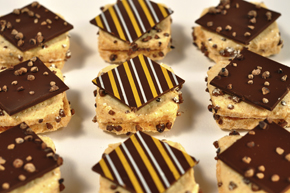
Waitrose now offer petits-four type patisserie goods in freezer cabinets. All products that would be time-consuming to make, at home, but a hostess likes to serve at the end of a dinner, these frozen bakery goods are one of their range that is now manufactured in France, especially for Waitrose, and tailored to British tastes by including milk and white chocolate fancies amongst the selection.
Ready-made pastry
For those customers who want to make pies and pastries at home, the rise in ready-made pasty products is proving a boon. Jus-Rol is one of the main companies that provide this freezer-cabinet staple. Ready-made pastry has suddenly become trendy and acceptable, thanks to TV Chefs using it in their programs. Instead of tiresome work making and rolling out pastry, home cooks open a packet and out come acceptable ready-prepared short crust, puff pastry, etc. Jus-Rol’s Puff Pastry is Vegetarian Society approved and suitable for vegans. Latest in their range are Pastry Sheets – just right for a quick topping for a trendy pie.
Chef’s Comment on ready-prepared Pastry
Next month is Jus-Rol’s British Pie Week; from the 4th-10th March homemade pies will be the order of the day. As part of last year’s celebrations, Pub Chef Carol Haime – Pub Pie Champion for her innovative culinary creation, Wheatley House Pheasant Pie, (with baby parsnips and juniper, and a poppy seed crust), was chosen from almost 120 recipes submitted by pub chefs from across Britain. Carol added a new dimension to pie-making by using innovative ingredients such as juniper berries along with flavored pastry – and her novel approach paid off! “I use Jus-Rol because it saves time in the kitchen. When I use it there is very little or no wastage which is very important. Jus-Rol is just as good, if not better than when I make it myself, so why wouldn’t I use it?”
Ethnic Breads
With the huge migration of Ethnic groups across Europe, one thing that seems a constant is they all want their own bread wherever they go. In Britain, Polish people make up the biggest group from overseas, and bread is dear to their hearts. Expat Poles have opened Cracow Bakery, supplying ‘Chleb Krawski’, and other traditional Polish breads. These and other breads are now available across Europe, wherever there is a large influx of migrants, adding to the novelty breads available in many supermarkets.
Germany
Germans eat more bread than any other European country, consuming 80kg per person per year. Larger plant baking companies now supply their own chains of retail shops instead of supermarkets, are growing rapidly, accounting for more than 30% of German spend on breads. Boasting over 300 varieties of bread, it is no wonder that Germans eat so much bread, but healthy ingredients such as sesame and sunflower seeds are gaining popularity. Sales of healthier crisps and snacks are growing, whereas less healthy breads and cakes are losing ground in some markets. With weight problems on the rise, most Germans are at least looking at healthier breads – even though they still buy the traditional ones in large quantities. However, it is the rising numbers of elderly Germans, worried about heart problems, which are encouraging healthier options, with gluten-free products are gaining in popularity. Euromonitor has analyzed sales of what it calls ‘functional breads’, saying that in Germany these are expected to grow annually by 15% – although it is doubtful what impact this will have on the market overall, as in 2008 they forecast per capita consumption to reach just over 200g, “compared with 57.5 kg per capita for total bread”. However, they say “with continuing innovation, coupled with stronger and more effective marketing support, functional bread could possibly step out of its current niche”.
 In-store Bakeries
In-store bakeries continue to work better on the Continent than in Britain. Customers expect fresh bread daily or even several times a day, rather than in Britain where bread is purchased to last for several days. In UK 30% of sales are sliced and wrapped private label products, much of it sold on garage forecourts where major supermarkets have established mini-markets. This probably accounts for it being a staple purchase, rather than an impulse buy, and puts Britain at the bottom of the table, only consuming 50kg per head per year.
Easter Food goes Fairtrade
Across Europe most countries have traditional Easter foods; many bakery products, such as Britain’s Simnel Cake. This is a light fruit cake, sandwiched together with marzipan, and decorated with traditional eggs, fluffy chickens and flowers. To make it easy to produce a Simnel Cake, and also following in the movement towards fair trade ingredients, Tropical Wholefoods have come up with ready-packed ingredients; just slit open the packs, pour into the mixing bowl and add eggs, etc. As an interesting marketing tool, each package states clearly where it is sourced, such as the raisins which are grown on the Shomali Plain in Afghanistan. Each pack has a mini-history shown on the back, which will be fun for kids to follow.
Eating your fashion bag
Mulberry, the trendy designer clothing manufacturer, is diversifying, and has chosen the Spelt bread market. Roger Saul (founder of Mulberry) recently introduced the Sharpham Park Spelt Savoury Biscuit range, with biscuits available in two distinctive flavors, Cheddar & Mustard Crackers and Organic Spelt & Four Seed Crackers. Perfect for health-conscious individuals, these biscuits are just as delicious served on their own, as they are served with an accompaniment, such as cheese. Organic Spelt is stone ground in small batches ensuring that the flour used in the biscuits is as fresh as can be. Peter Ticknell, Sharpham Park’s miller, explains, ‘What makes spelt grain different from wheat is that it has a much tougher husk, which is a protective outer shell around the grain.’ The Sharpham Park Mill is the only one of its kind in Europe if not the world, in that it is entirely dedicated to stone milling. Beer Another unusual ingredient is beer, or at least stout. Irwin’s is Northern Ireland’s largest independent bakery, and makes bread incorporating Guinness, creating bread with 17% Guinness content; Swedish bakery equipment company Glimek now makes a breadline especially for in-store bakeries. Customers say it captures perfectly the authentic taste of Guinness.
Frozen bakery section
In October, Swedish Lantmaanen Unibake took over one of the production plants of German bakery Group Gramms Backstuben in Suhl, which will double the production capacity for frozen bakery products in Suhl.
In-store bakeries
In-store bakeries work better on the Continent: customers expect fresh bread daily, rather than in Britain where bread is purchased to last for several days. Swedish bakery equipment company Glimek now makes a breadline especially for in-store bakeries. In UK 30% of sales is sliced and wrapped private label products, much of it sold on garage forecourts where major supermarkets have established mini-markets. This probably accounts for it being a staple purchase, rather than an impulse buy, and puts Britain at the bottom of the table, only consuming 50kg per head per year. And finally, to get across the ‘less fat, healthier options’, Customers who have eaten too much bread can salve their consciences with the Weight Watchers Cookie range, designed to fit in with the Weight Watchers POINTS® values. Two Cookies have a point value of just 1½, and they come in Ginger & Lemon, Double Choc Chip, Oat Digestive, Cranberry & Orange Cookies, Toffee Cookies and Strawberry and Cream Cookies.